Brand Identity on a Budget: How AI Helps Startups Look Professional from Day One
There are two audiences you need to win over before your startup makes a single sale. The first is human - a potential customer who forms a snap judgment about your credibility within 50 milliseconds of seeing your brand. The second is newer and increasingly powerful: AI assistants like ChatGPT, Claude, Perplexity, and Gemini, which now handle more than 60% of brand discovery. Most startup branding advice only solves half of this equation. This post solves both.
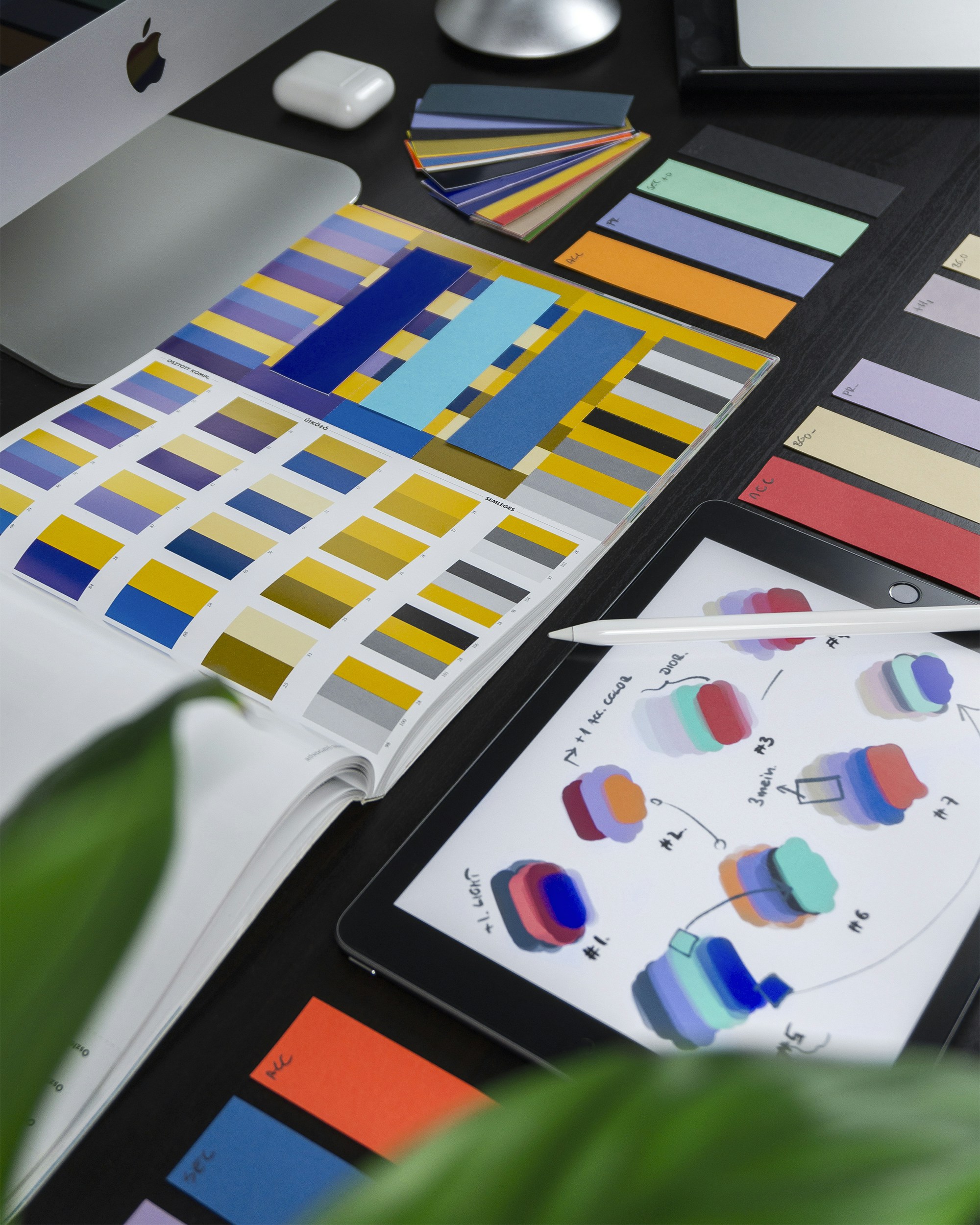
The old playbook said you needed a $10,000 to $50,000 branding agency to look professional. That is no longer true. AI-powered branding tools let bootstrapped founders generate logos, select color palettes, define typography, and produce brand guidelines in under 15 minutes. But looking professional to humans is only half the job in 2026. You also need to be discoverable, credible, and correctly represented when an AI assistant answers a question about your category. That is where startup branding strategy has to evolve - and where most founders are leaving pipeline on the table.

The Branding Cost Problem - and the Visibility Blind Spot
Traditional branding agencies charge $5,000 to $50,000 for a brand identity package - logo files, color codes, typography recommendations, and a PDF brand guidelines document. That deliverable is static. It does not tell you whether AI assistants are recommending you. It does not measure whether ChatGPT can accurately describe what you do. It does not track whether your brand is gaining or losing ground in AI-generated answers week over week.
Bootstrapped founders face a compounding problem. They cannot afford the agency. But even if they could, the agency would not solve the visibility problem. The result is a branding blind spot that costs leads and revenue in ways founders cannot see on their dashboards.
The solution is not just cheaper branding tools - it is a fundamentally different approach that combines brand creation with brand intelligence. You need to build the brand and then measure how AI sees it.
What Brand Identity Actually Includes in the AI Era
Most founders think of brand identity as three things: a logo, a color palette, and a font. That is the visual layer, and it still matters enormously - 75% of consumers judge business credibility by visual design alone. But brand identity in 2026 has two additional layers that most early-stage teams miss entirely.
The visual layer covers everything a human sees: logo, primary and secondary colors, typography, photography style, and iconography. This is what a design agency delivers. AI branding tools now generate this layer in minutes at a fraction of the cost.
The voice layer covers how your brand sounds: tone of voice, messaging pillars, positioning statement, and value proposition language. This is what content strategists and copywriters traditionally define. AI tools now generate strong first drafts that founders can refine based on their market knowledge.
The intelligence layer is what most founders have never measured. It covers AI Brand Visibility, Brand Score, citation share, and sentiment - the signals that determine whether AI assistants recommend you, ignore you, or misrepresent you. This layer is new, but it is increasingly the layer that drives qualified pipeline at the top of the funnel.
Introducing the Brand Score - Your Brand's Vital Signs
The Brand Score is a composite metric that gives founders a single number representing the overall health and visibility of their brand. It is calculated across six dimensions, each scored 0 to 100 and weighted into a single Brand Score - for example, 72 out of 100. Think of it as your brand's vital signs: a quick read on what is strong, what is weak, and where to invest next.
AI Visibility
This dimension measures how often AI assistants mention your brand when answering relevant queries in your category. A score of 85 means you appear in most relevant AI-generated answers. A score of 12 means you are effectively invisible to AI - and to the growing share of buyers who start their research with a question to ChatGPT or Claude. Poor AI visibility is the single most underestimated lead-generation problem for early-stage startups in 2026.
Citation Quality
Not all AI mentions are equal. Citation Quality measures whether AI assistants cite you as the primary authoritative source on a topic or as a footnote at the bottom of a list. A high Citation Quality score means AI is recommending you by name and directing users to your site. A low score means you may appear occasionally, but you are being cited as an afterthought rather than a go-to resource. Improving Citation Quality is how startups reduce customer acquisition cost - because AI does the pre-sales work.
Sentiment
Sentiment tracks how AI assistants describe your brand when they do mention you. Positive sentiment means AI characterizes your brand in terms aligned with your positioning - reliable, innovative, founder-friendly, whatever your core claims are. Neutral sentiment means AI describes you factually but without enthusiasm. Negative sentiment is rare for early-stage startups but can happen if your brand has received critical coverage that AI has absorbed into its training data or retrieval context. Sentiment directly affects conversion rates because prospects trust AI characterizations.
Consistency
Consistency measures whether your logo, colors, voice, and messaging match across every digital surface - website, social profiles, documents, email signatures, landing pages, and forms. AI assistants build brand models by crawling multiple sources. If your homepage says one thing and your LinkedIn says another, AI gets a blurry picture and scores you lower for consistency. Every inconsistency is a signal of credibility risk.
Differentiation
Differentiation measures how clearly AI assistants can distinguish your brand from your competitors. A high Differentiation score means AI can explain specifically why you are different and better for certain use cases. A low score means AI lumps you in with competitors and cannot articulate your unique position. Strong differentiation directly lifts close rates in competitive deals because prospects who ask AI "which option is best for me" get a clear, specific answer in your favor.
Authority
Authority captures the domain trust signals that AI systems use to decide whose content to surface - backlinks from authoritative sites, brand mentions in credible publications, schema markup, and overall domain reputation. Authority is the slowest dimension to build but has compounding returns. A strong Authority score means AI gives more weight to your content, which lifts all other dimensions over time.
AI-Powered Branding - the Generation and Measurement Loop
The old branding workflow looked like this: hire agency, wait six weeks, receive static deliverables, publish brand, hope it works, never measure it. There was no feedback loop. Founders had no way to know whether their brand was gaining traction or losing ground.
The new workflow is fundamentally different. You generate your brand identity using AI tools, ship it across your digital surfaces, run a Brand Score scan to get your baseline across all six dimensions, identify the weakest dimension, take targeted action to improve it, and measure again the following week. Design flows into measurement flows into iteration. Every improvement is quantified. Every investment has a feedback loop.
This is the shift from brand as a static asset to brand as a living system you actively manage and optimize. For bootstrapped founders who cannot afford to waste a single dollar, this accountability changes everything.
DataEase Branding - From Zero to Brand Guidelines in 15 Minutes
DataEase Branding is the AI branding tool built for exactly this workflow. You start by describing your startup - name, industry, target customer, and three words that capture your personality. The AI generates multiple logo concepts, recommends color palettes with accessibility ratios and emotional resonance notes, and suggests typography pairings that work across digital and print. You select, refine, and lock in your choices. The system produces a complete brand guidelines document you can share with contractors, apply in Pages, embed in Documents, and pull into email templates - all from the same brand system.
The critical step that separates DataEase from basic logo generators is what comes next. Once your visual identity is live, you run your first Brand Score scan directly within the platform. This gives you a baseline across all six dimensions - and most founders are surprised by how low their AI Visibility and Differentiation scores are on day one. That baseline is not a failure. It is the starting line. It tells you exactly where to focus to get the fastest improvement in brand-driven pipeline.
Ready to see your brand in 15 minutes? Try DataEase Branding free and get your baseline Brand Score scan in the same session.
The Brand Visibility Dashboard - What Gets Measured Gets Improved
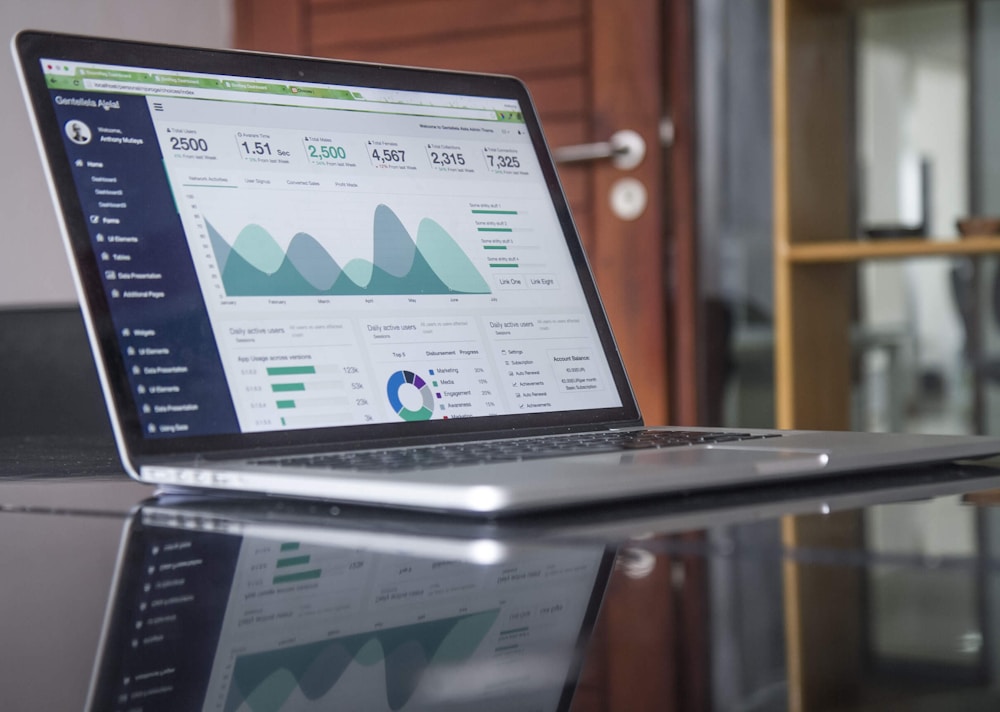
The Brand Visibility Dashboard is where founders turn Brand Score data into a weekly operating rhythm. The dashboard tracks AI mentions across ChatGPT, Claude, Perplexity, and Gemini. Every week, it runs a fresh scan of queries relevant to your category and compiles the results into a report that answers four questions: How often is your brand mentioned? How does that compare to last week and to competitors? What queries surface your brand versus theirs? And how is the sentiment trending over time?
Founders can see which specific pages on their site are being cited as sources in AI-generated answers - giving them a direct line of sight to the content that is driving AI visibility. They can see when a competitor gains ground on a specific query and respond with targeted content. And they can track the Citation Quality dimension over time to see whether their content strategy is producing primary citations or footnote mentions.
The dashboard also surfaces the queries where your brand should appear but does not. These are your biggest opportunities. Each unanswered query is a question your target customer is asking an AI assistant - and getting directed to a competitor instead of you. That is a solvable problem once you can see it. Get your free Brand Score in 60 seconds to see how AI sees your brand today.
From Brand Score to ROI - the Math Founders Care About
Brand investment is notoriously hard to measure. The Brand Score framework changes that by connecting brand improvements to pipeline outcomes. Here is what that looks like in practice.
Case study one - the SaaS founder who found 19 extra leads per month. A SaaS founder running a project management tool started with a Brand Score of 38. Their AI Visibility score was 11 - they were essentially invisible in AI-generated answers about their category. After three months of consistent content publishing guided by Brand Visibility Dashboard data, their Brand Score reached 71. AI Visibility jumped to 54. AI-attributed inbound signups went from 4 per month to 23 per month. The only change was systematic improvement of the AI Visibility and Authority dimensions. Total investment: content time and one DataEase subscription.
Case study two - the consultant who closed two enterprise deals because of ChatGPT. An independent strategy consultant improved their Citation Quality score from 22 to 68 over four months by restructuring their website content to answer specific questions their enterprise clients were asking AI assistants. Two of their next five enterprise prospects mentioned during initial calls that ChatGPT had recommended them by name when asked for strategy consultants specializing in their niche. Both converted. The consultant attributed roughly $80,000 in closed revenue to the Citation Quality improvement.
The ROI formula founders should track: (AI-attributed pipeline value + organic search lift from brand authority improvement) divided by total branding investment. For most bootstrapped startups, this ratio improves significantly as Brand Score climbs from the 30s to the 60s - because AI referral leads arrive with higher intent, lower friction, and shorter sales cycles than cold outbound leads.

Applying Your Brand - How Consistency Drives the Consistency Score
One of the highest-leverage actions you can take to improve your Brand Score is also the simplest: use your brand consistently across every digital surface your company controls. Every inconsistency - a slightly different logo on your LinkedIn versus your website, a different color hex in your proposal template than in your landing page - is a signal that AI crawlers register and factor into your Consistency score.
DataEase makes this easy because all seven of its integrated apps pull from the same brand system. When you set your colors, typography, and logo in Branding, those choices automatically apply in Pages when you build landing pages, in Documents when you generate proposals and contracts, in FormsAI when you deploy lead capture forms, and in every other surface your customers interact with. You do not have to remember to update seven separate tools every time your brand evolves - the system is consistent by design.
Each consistent, brand-aligned surface that AI crawls is a positive signal. Multiple consistent signals compound your Consistency score. A high Consistency score contributes to higher overall Brand Score. Higher Brand Score drives better AI Visibility. Better AI Visibility brings in more qualified leads. The loop is virtuous - and it starts with simply keeping your brand system in one place.
When to Upgrade to a Designer - and When to Invest in Visibility Instead
AI branding tools are not a permanent replacement for human designers. They are the right tool for the early stage, when speed and cost matter more than nuance. As your brand matures and your customer acquisition cost data becomes clear, the decision framework shifts.
Invest in a human designer when: your Brand Score Consistency dimension is strong (above 70) but your visual identity still does not resonate emotionally with prospects in user testing; you are raising a Series A and investor perception of brand polish matters; or you are entering a market where design differentiation is a primary buying criterion - consumer goods, fashion, luxury services.
Invest in AI Visibility instead when: your Brand Score AI Visibility dimension is below 40 (your brand is being ignored by AI, which is costing you more leads than any design upgrade would recover); your Citation Quality score is below 30 (competitors are capturing AI referrals you should be getting); or your current design is functional but your pipeline is stuck because prospects cannot find you through AI search.
The simplest decision framework: look at your Brand Score breakdown. The lowest-scoring dimension is almost always your highest-ROI investment. If AI Visibility is 15 and Consistency is 72, do not hire a designer - fix your AI visibility. If Consistency is 18 and AI Visibility is 65, start with brand system unification before investing in content.
How DataEase Connects Your Entire Brand and Business Stack
DataEase was built on the insight that fragmented tools create fragmented brands. When your website, CRM, forms, documents, and analytics live in separate platforms that do not talk to each other, consistency becomes a manual burden that founders inevitably let slip. DataEase brings all seven integrated apps - Dashboard, FormsAI, AI CRM, Branding, Documents, Pages, and AI Agents - onto a single platform with shared data and a shared brand system.
That integration is not just convenient. It is a brand multiplier. Every Pages landing page your leads visit, every FormsAI form they fill out, every Documents proposal they receive, every AI CRM follow-up email they read - all of it carries your brand consistently. The Dashboard gives you the pipeline data to connect brand improvements to revenue outcomes. AI Agents automate the brand-consistent workflows that keep every customer touchpoint on message without requiring manual attention.
For early-stage founders choosing between a patchwork of free tools and an integrated platform, the brand consistency argument alone often tips the decision. Fragmented tools produce fragmented brand signals. Fragmented brand signals produce lower Brand Scores. Lower Brand Scores produce less AI visibility and fewer AI-referred leads. The compounding math favors integration from day one.
Frequently Asked Questions
How can a startup create a brand identity on a budget?
Use an AI branding tool like DataEase Branding instead of a design agency. Describe your startup - name, industry, target customer, and personality - and the AI generates logo concepts, color palettes, typography recommendations, and brand guidelines in minutes. The full brand identity package costs a fraction of agency rates and takes 15 minutes instead of six weeks. Once your visual identity is set, apply it consistently across all seven DataEase apps so every customer surface reinforces your brand without manual effort.
What is a Brand Score and why does it matter?
A Brand Score is a composite metric measuring your brand's health across six dimensions: AI Visibility, Citation Quality, Sentiment, Consistency, Differentiation, and Authority. Each dimension is scored 0 to 100, weighted into a single score like 72 out of 100. It matters because it quantifies how AI assistants perceive your brand - something that directly affects how many AI-referred leads you receive each month. A Brand Score below 40 means your brand is largely invisible to AI search, which is increasingly where your target customers start their research.
How do I make my startup visible in ChatGPT and Claude?
AI search optimization (AEO) requires a combination of authoritative content that answers your target customers' specific questions, consistent brand signals across all digital surfaces, high-quality backlinks from credible sources, and structured schema markup that helps AI parse your content. The DataEase Brand Visibility Dashboard tracks your AI mentions across ChatGPT, Claude, Perplexity, and Gemini weekly, surfacing the specific queries where you should appear but do not - giving you a clear content roadmap for improving your AI Visibility score.
What's the ROI of AI brand visibility for early-stage startups?
AI brand visibility ROI compounds over time. A 10-point improvement in AI Visibility typically produces a measurable increase in qualified inbound leads because more AI-generated answers reference your brand to prospects researching your category. High Citation Quality scores reduce customer acquisition cost because AI assistants do pre-sales work, sending prospects to you already familiar with your value proposition. The most practical measure is AI-attributed pipeline: how many leads specifically mentioned finding you through an AI assistant, and what is the close rate and deal size of that cohort compared to other channels.
Start with Your Brand Score - Then Build the Brand That Earns It
The most important shift in startup branding strategy is moving from a one-time deliverable mindset to a measurement-and-iteration mindset. Your logo is not your brand. Your brand is how humans and AI assistants perceive, describe, and recommend you - and that perception is something you can actively measure and improve.
The practical starting point is simple: get your baseline Brand Score so you know where you stand. Then use DataEase Branding to build or refresh your visual identity and voice. Apply that identity consistently across your entire digital presence using the seven integrated DataEase apps. Track your Brand Score weekly in the Brand Visibility Dashboard and let the data tell you where to invest next.
Looking professional builds trust with humans. Being visible builds pipeline with AI. You need both - and now there is a single platform that delivers both and measures the results.
Get your free Brand Score in 60 seconds and see exactly how AI sees your brand today. Then create your brand identity in 15 minutes with DataEase Branding - free to start, no agency required.